 简体中文
 English
 한국어

电压、温度和 Delta-V:镍氢电池充满电的指标 镍氢电池(NiMH)是一种可充电电池,使用氢氧化镍(NiOOH)作为正极(阴极),吸氢合金作为负极(阳极)。与镍镉(NiCd)电池相比,镍氢电池有几个明显的优点:由于 [...]
博客

主题
热门产品
最新信息

What is calibration interval?
Short answer: A calibration interval is the planned time between two calibrations of an instrument. In other words, it’s how long you can rely on the last calibration before the system needs to be calibrated again. For Arbin battery test systems, Arbin recommends a 12-month (annual) calibration interval. Why does the calibration interval matter? All […]
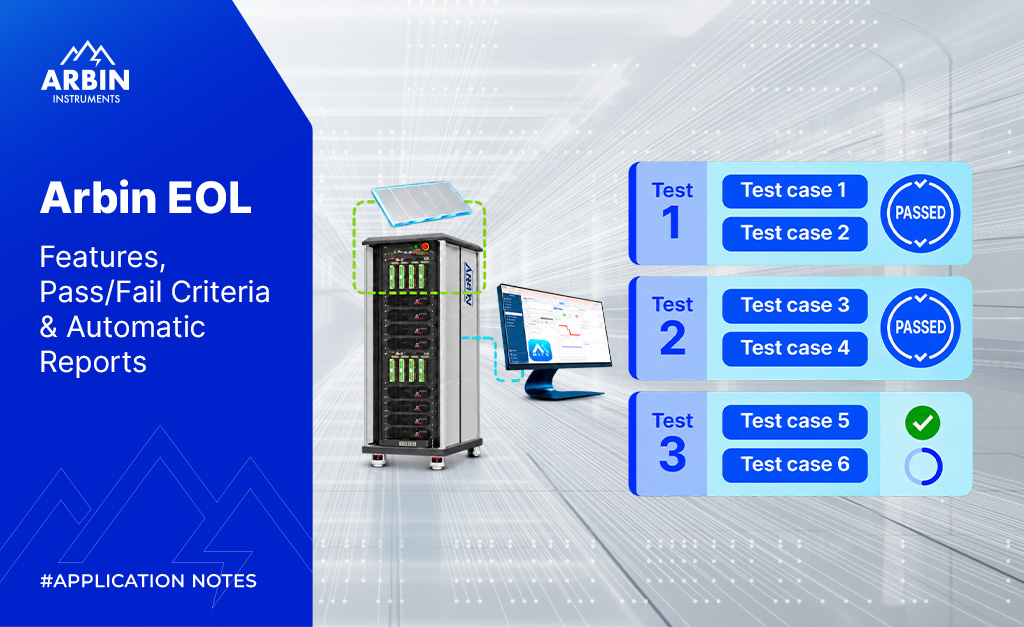
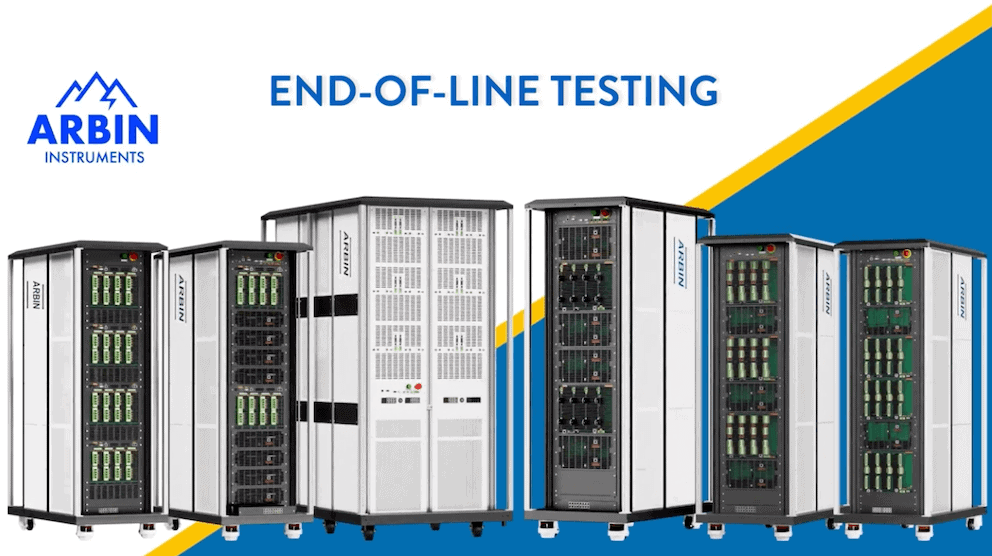
Arbin EOL: Features, Pass/Fail Criteria & Automatic Reports
Arbin End-of-Line (EOL) – FAQ What is Arbin EOL? It’s an end-of-line testing feature built into Arbin’s MITS software. You use it to run pass/fail checks on batteries at the final stage of production. What can it do? Custom pass/fail criteria: You write your own rules with logical expressions and equations, using AND/OR conditions (“Whens” […]
What is the maximum data logging rate an Arbin system can handle? What about Burst Mode?
The logging speed depends on the product series and on how many channels you run at the same time. With a single channel running, Arbin systems can log at up to 1 kHz (1 ms per point) in normal mode. The more channels run at once, the lower the rate per channel, typically a few […]
Arbin News 查看全部

关于选择哪款Arbin产品——再生功能概述
能源效率是每个工厂和部门都高度关注的问题。Arbin 的再生产品旨在满足您的节能需求,并提供卓越的性能和可靠性。一、理解再生功能 再生功能允许在电池放电过程中释放的能量返回电网,而不是以热量形式浪费掉。相比之下,[...]

关于Arbin产品的选择概述——电压和电流范围
Arbin’s Battery Testing Systems Arbin’s main products are advanced battery testing systems that accurately simulate real-world charge and discharge cycles. These systems help researchers, engineers, and manufacturers evaluate battery performance, safety, and lifespan under a wide range of conditions. Key Specifications Two of the most important specifications of a testing system are its maximum channel […]

如何检测镍氢电池是否充满电
电压、温度和 Delta-V:镍氢电池充满电的指标 镍氢电池(NiMH)是一种可充电电池,使用氢氧化镍(NiOOH)作为正极(阴极),吸氢合金作为负极(阳极)。与镍镉(NiCd)电池相比,镍氢电池有几个明显的优点:由于 [...]

全套电池测试
LBTS-TC:Arbin 的交钥匙电池测试一体化电芯测试,集成了测试通道、温度室和电芯支架。精度:100ppm 测量,业界领先的 24 位分辨率,每个测试通道跨越四个电流量程 交钥匙解决方案,与通道和温度电缆完全集成,通道与 MZTC 相互连接 每个隔离的热室可独立管理动态温度设置点 [...]

霍尼韦尔与 Arbin Instruments 携手革新大规模锂离子电池制造技术
霍尼韦尔今天通过与 Arbin Instruments 公司合作,为锂离子电池制造商和千兆工厂增强了其电池制造卓越平台 (MXP),集成了先进的自主化成系统。
Ambri选择Arbin仪器公司的电池测试设备来扩展下一代开发实验室
Arbin仪器公司,电池测试仪器的领导者,已被Ambri选中为其试验性生产扩张提供大电流电池测试系统。这些系统将促进其革命性的液体金属™电池的开发和商业化。Ambri的下一代电池为各种电网和数据中心提供长期固定的能量储存 [...] 。


欧洲的电力扩张。Gigafactories的崛起和Arbin的回应
作为我们支持那些推动电池行业发展的目标的一部分,Arbin仪器致力于欧洲的电池发展。Arbin正在努力通过两个关键的方式来满足对电池研究和生产日益增长的需求:为大型企业提供循环器和数据管理解决方案,以及一个专门的、不断增长的Arbin欧洲团队。

Arbin CAN:利用Arbin的CAN总线能力进行BMS到测试仪的通信
Arbin的Mits Pro采用了CAN总线协议,允许在电池测试设备和电池管理系统之间发送和接收CAN信息,并允许外部控制Arbin测试器。

与电池行业一起向未来扩展。阿尔滨期待着2022年的到来
在2021年庆祝了30周年之后,Arbin现在准备展望2022年,继续我们的使命,迎接我们遇到的每一个挑战。Arbin致力于保持在电池技术的最前沿,提供最先进的电池测试设备以促进研究。 多年来,电池行业已呈指数式增长。在这一过程中,我们发现了很多问题。
行业新闻 查看全部

Solar & Storage Live Malaysia 2026: Advancing Battery Innovation for a Sustainable Energy Future
Event Overview Solar & Storage Live Malaysia 2026 is a premier event in Southeast Asia dedicated to solar energy and energy storage technologies. Taking place on April 8–9, 2026 at MITEC in Kuala Lumpur, the exhibition gathers industry leaders, engineers, and innovators across the global energy ecosystem. Organized by Terrapinn, a leading international B2B event […]




为什么锂离子电池的回收仍然有限?
随着电池在日常生活中变得越来越普遍,从家用产品到能源储存,电池废料应该得到适当的处理和照顾。了解更多关于Arbin如何帮助处于电池研究前沿的客户。

天气如何影响电网?
由于绝大部分停电是由天气事件引起的,因此建立一个能够抵御天气事件并尽快恢复的系统是至关重要的。了解更多关于Arbin的设备如何支持电网存储行业的信息。


微动性是如何改变我们的移动方式的
微移动解决方案将继续重塑我们与交通的关系,并考虑其对环境的影响。Arbin致力于站在电池测试的最前沿,为电池材料的研究、测试和开发进行技术革新和改进。

清洁能源的转变
在过去的二十年里,美国的可再生能源产业一直在稳步增长。从2000年到2018年,可再生能源增长了100%,在2020年,可再生能源占全国能源的11.4%。随着政府对电力部门到2035年实现脱碳的新举措,向清洁能源的转变将最 [...]
