 English
 简体中文
 한국어


Voltage, Temperature, and Delta-V: Indicators of Full Charge in NiMH Cells The Nickel-Metal Hydride (NiMH) battery is a type of rechargeable battery that uses nickel oxide hydroxide (NiOOH) as the positive electrode (cathode) and a hydrogen-absorbing alloy as the negative electrode (anode). Compared to nickel-cadmium (NiCd) batteries, NiMH batteries offer several distinct advantages: Thanks to […]
Blog

Topics
Most Popular
- Turnkey Battery Testing
- Arbin EOL: Features, Pass/Fail Criteria & Automatic Reports
- What is the maximum data logging rate an Arbin system can handle? What about Burst Mode?
- What can be included in the export file? EIS data? Statistics? Coulombic efficiency?
- What file formats can Arbin export? What if I don’t have Excel?
LATEST

Arbin EOL: Features, Pass/Fail Criteria & Automatic Reports
Arbin End-of-Line (EOL) – FAQ What is Arbin EOL? It’s an end-of-line testing feature built into Arbin’s MITS software. You use it to run pass/fail checks on batteries at the final stage of production. What can it do? Custom pass/fail criteria: You write your own rules with logical expressions and equations, using AND/OR conditions (“Whens” […]
What is the maximum data logging rate an Arbin system can handle? What about Burst Mode?
The logging speed depends on the product series and on how many channels you run at the same time. With a single channel running, Arbin systems can log at up to 1 kHz (1 ms per point) in normal mode. The more channels run at once, the lower the rate per channel, typically a few […]

What can be included in the export file? EIS data? Statistics? Coulombic efficiency?
Short answer: Every export includes the basic time-series data for the DUT: current, voltage, power, capacity and energy at each logged point. You can add more using the checkboxes in the Export window. These include cycle and step statistics (with Coulombic efficiency), the schedule, auxiliary data such as temperature, BMS data, extended variables such as […]
ARBIN NEWS VIEW ALL
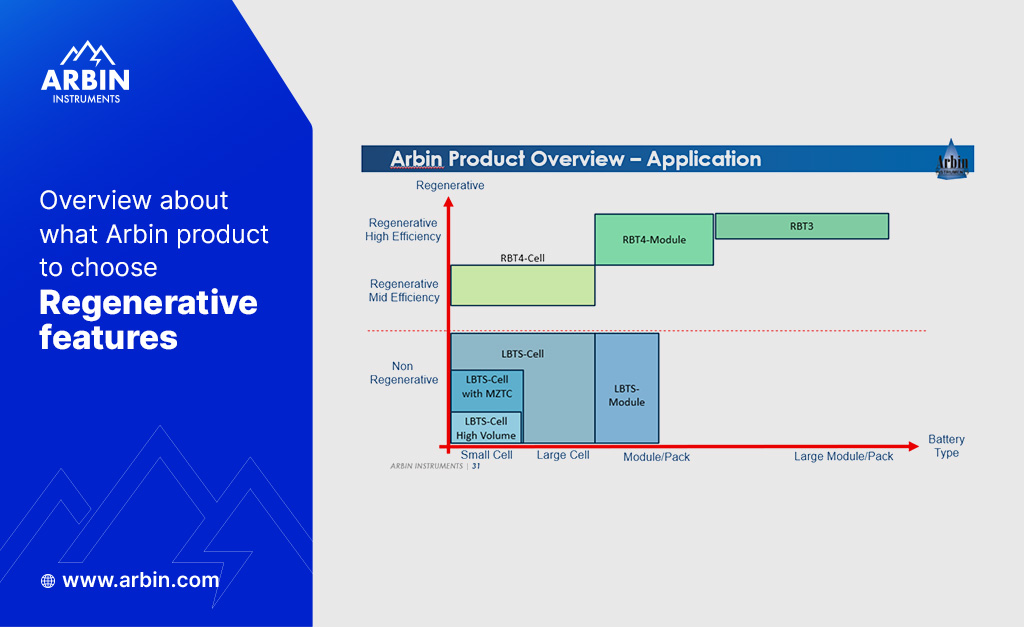
Overview about what Arbin product to choose – Regenerative features
Energy efficiency is a crucial concern for every factory and department. Arbin’s regenerative products are designed to meet your energy-saving needs with exceptional performance and reliability. I. Understanding the Regenerative Feature The regenerative feature allows energy released during battery discharge to be returned to the power grid, instead of being wasted as heat. In contrast, […]
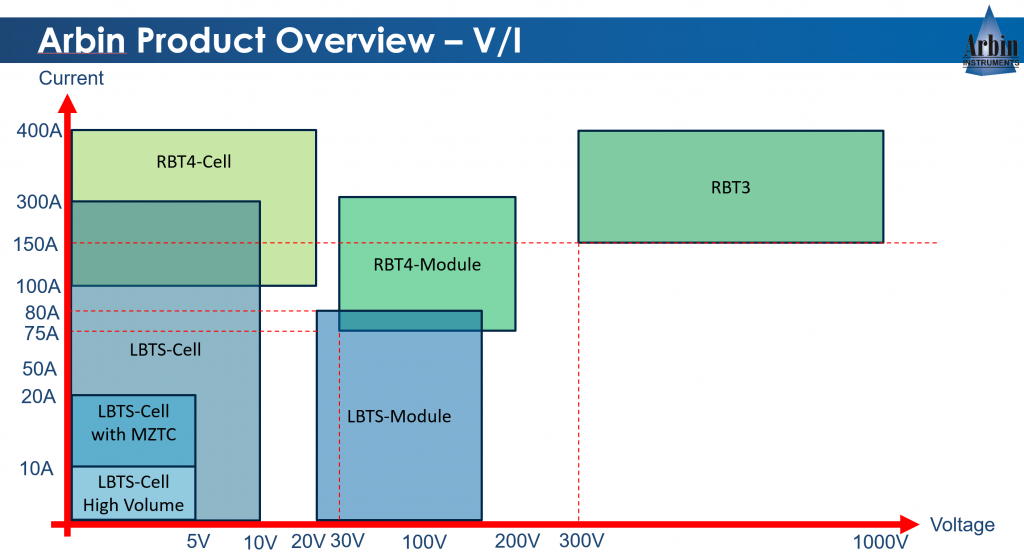
Overview about what Arbin products to choose – Voltage and Current Range
Arbin’s Battery Testing Systems Arbin’s main products are advanced battery testing systems that accurately simulate real-world charge and discharge cycles. These systems help researchers, engineers, and manufacturers evaluate battery performance, safety, and lifespan under a wide range of conditions. Key Specifications Two of the most important specifications of a testing system are its maximum channel […]
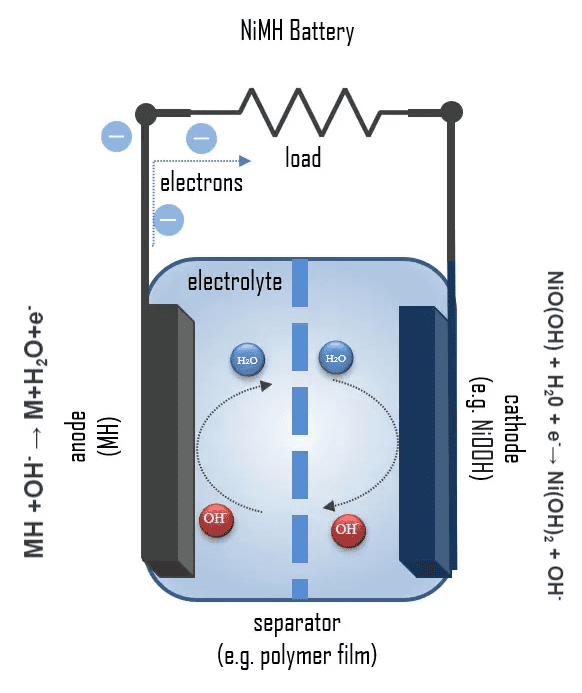
How to detect NiMH battery fully charged status
Voltage, Temperature, and Delta-V: Indicators of Full Charge in NiMH Cells The Nickel-Metal Hydride (NiMH) battery is a type of rechargeable battery that uses nickel oxide hydroxide (NiOOH) as the positive electrode (cathode) and a hydrogen-absorbing alloy as the negative electrode (anode). Compared to nickel-cadmium (NiCd) batteries, NiMH batteries offer several distinct advantages: Thanks to […]
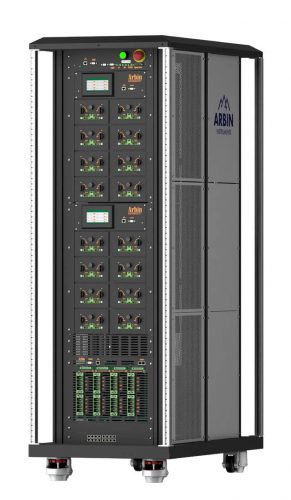
Turnkey Battery Testing
LBTS-TC: Arbin’s Turnkey Battery Testing All-In-One Cell Testing with integrated test channels, temperature chambers, and cell holders. Precision: 100ppm measurement with industry-leading 24-bit resolution across four current ranges per test channel Turn-Key Solution, arrives fully integrated with channel and temperature cables interconnected from channel to MZTC Dynamic Temperature Setpoints managed independently per isolated thermal chamber […]
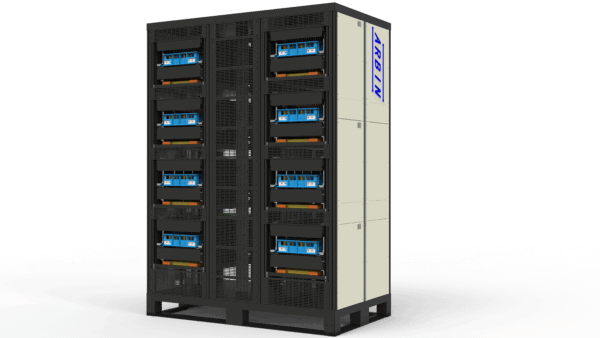
Honeywell and Arbin Instruments Team Up to Revolutionize Large Scale Lithium-Ion Battery Manufacturing
Honeywell today enhanced its Battery Manufacturing Excellence Platform (MXP) for lithium-ion battery manufacturers and gigafactories through a collaboration with Arbin Instruments to integrate an advanced autonomous formation system.
Ambri Selects Arbin Instruments’ Battery Test Equipment for Expansion of Next Generation Development Lab
Arbin Instruments, a leader in battery testing instrumentation, has been selected by Ambri to provide high current battery testing systems for its pilot manufacturing expansion. These systems will facilitate the development and commercialization of its revolutionary Liquid Metal™ batteries. Ambri’s next-generation batteries offer long-duration stationary energy storage for a variety of electric grid and datacenter […]
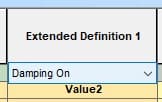
Avoiding BMS Damage During a Sudden Disconnect Event
Arbin Instruments offers two features that, especially when applied together, can minimize the risks associated with the sudden disconnect of a battery mid-test.

Europe’s Electric Expansion: The Rise of Gigafactories and Arbin’s Response
As part of our aim to support those moving the battery industry forward, Arbin Instruments is committed to battery development in Europe. Arbin is working to address the increasing demand for battery research and production in two key ways: cycler and data management solutions for larger operations and a dedicated, growing Arbin Europe team.
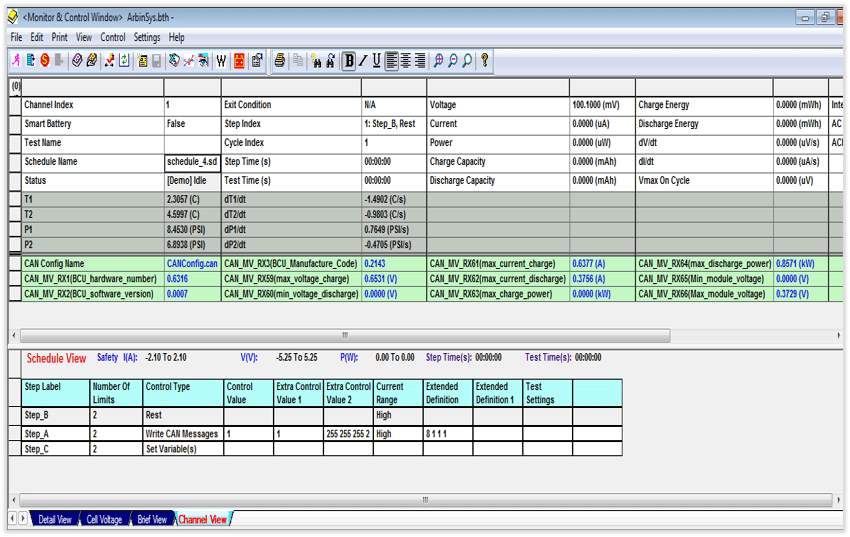
Arbin CAN: BMS-to-Tester Communication with Arbin’s CAN Bus Capability
Arbin’s Mits Pro employs the CAN Bus protocol, allowing CAN messages to be sent and received between the battery test equipment and the Battery Management System, and allows external control of the Arbin tester.

Expanding into the Future with the Battery Industry: Arbin Looks Forward to 2022
Having celebrated 30 years in 2021, Arbin now prepares to look forward to 2022, continuing our mission to rise up to every challenge we come across. Arbin is committed to remaining at the forefront of battery technology, providing state-of-the-art battery test equipment to facilitate research. The battery industry has grown exponentially over the years. The […]
INDUSTRY NEWS VIEW ALL
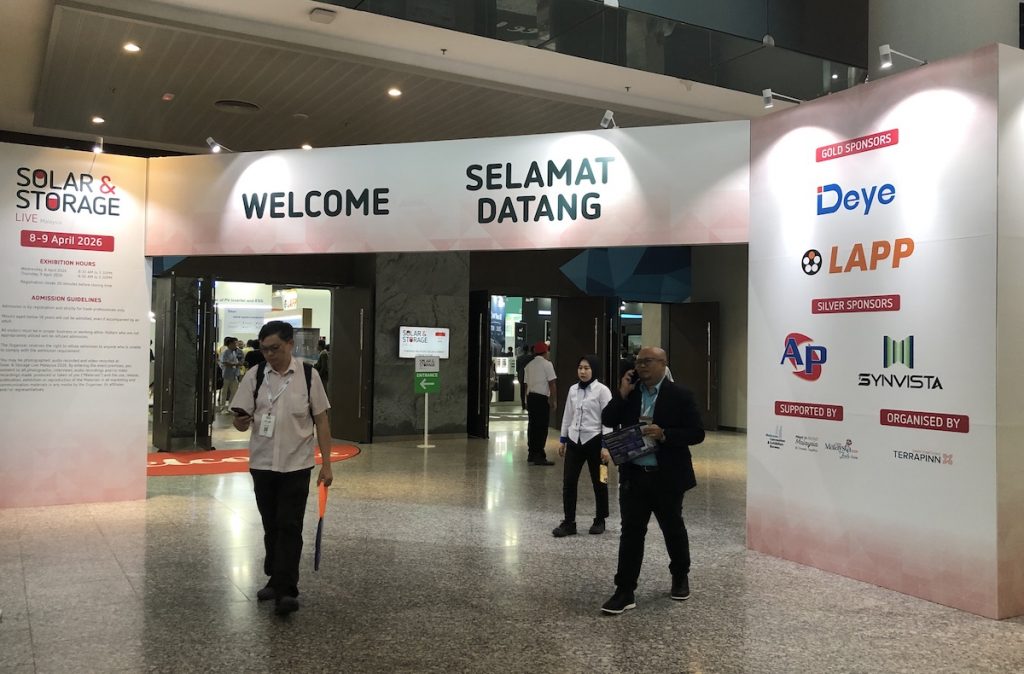
Solar & Storage Live Malaysia 2026: Advancing Battery Innovation for a Sustainable Energy Future
Event Overview Solar & Storage Live Malaysia 2026 is a premier event in Southeast Asia dedicated to solar energy and energy storage technologies. Taking place on April 8–9, 2026 at MITEC in Kuala Lumpur, the exhibition gathers industry leaders, engineers, and innovators across the global energy ecosystem. Organized by Terrapinn, a leading international B2B event […]
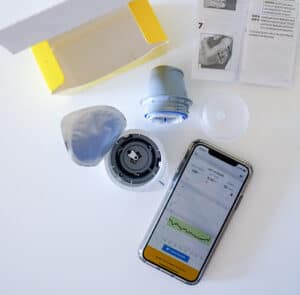
Batteries and Wearable Medical Technology
Innovations in medical technology play a huge role in improving preventive medicine and chronic illness management. Learn how Arbin’s battery test equipment supports advancements in medical technology.
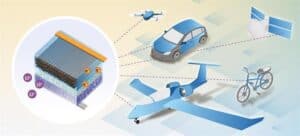
3 Industry-Leading Applications of Structural Batteries
What does it mean to have a “massless” battery, and what are the possible applications for this type of battery? Learn how Arbin can support developments in structural batteries.
How are batteries recycled?
Strong materials research will play a part in creating more sustainable and recyclable batteries in the future. Learn how Arbin can help you take on your next challenge.
How Nanotechnology is Facilitating Battery Development
Nanotechnology has the potential to make big waves in battery development, research, and manufacturing. Learn how Arbin’s high precision battery test equipment supports battery research.

Why is lithium-ion battery recycling still limited?
As batteries become more and more prevalent in everyday life, from household products to energy storage, battery waste should be properly handled and taken care of. Learn more about how Arbin helps customers on the forefront of battery research.
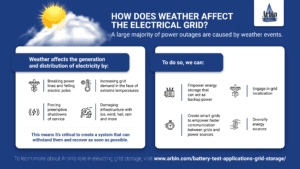
How does weather affect the electrical grid?
With a large majority of power outages caused by weather events, it is crucial to create a system that can hold up against them and recover as soon as possible. Find out more about how Arbin’s equipment supports the grid storage industry.
What are some different types of energy storage?
Each type of energy storage device has their advantages and limitations. Arbin Instruments has high quality equipment to test different types of solutions.

How Micromobility is Changing How We Move
Micromobility solutions will continue to reshape our relationship to transportation and consider its impacts on the environment. Arbin is committed to being at the forefront of battery testing, innovating and improving technology for battery materials research, testing and developing.

The Clean Energy Shift
The US renewable energy industry has been growing steadily in the past two decades. From 2000 to 2018, renewable energy grew 100% and in 2020, renewable sources made up 11.4% of the country’s energy source. With the government’s new initiative for the power-sector to be decarbonized by 2035, the shift towards clean energy will most […]
